
Benefits of Italy Citizenship
Italian citizenship can provide EU citizen rights after it is lawfully acquired. The Investor Visa itself grants residence rights; it does not grant citizenship or an Italian passport.
Life in Italy can appeal to investors and families because of its culture, education, healthcare system, and access to the Schengen Area as a resident.
Italy recognises multiple citizenship in many cases, but citizenship routes are separate from the Investor Visa. Naturalisation, marriage, descent, and service to the Italian state each follow their own legal requirements.
Italy Golden Visa Program Overview
The Italy Golden Visa program offers non-EU citizens residency permits in exchange for investments, encouraging foreign direct investment into the country's economy while providing investors with tax incentives and access to Italy's beautiful landscapes and cuisine.
Key Benefits of the Italy Golden Visa Program
-
Tax incentives: benefit from a favourable tax regime designed for high-net-worth individuals.
-
Lifestyle perks: enjoy world-class food, wine, art, and culture that make Italy one of Europe's most sought-after destinations.
-
Schengen Area access: a residence permit allows visa-free travel within the Schengen Zone.
-
Educational opportunities: access top-quality education institutions for yourself or your family members at reduced costs compared to other countries.
-
Backup plan: investors and their family members can enter the country at any time, even when the country borders are closed, and can spend as much time as wanted in Italy.
The official Investor Visa process starts with a Nulla Osta request through the Investor Visa for Italy portal, followed by the visa and residence-permit stages. Timelines and outcomes depend on document review by the competent authorities, so investors should not rely on a guaranteed approval period.

Explore the benefits and drawbacks of the Italy investment program versus other Golden Visas
Investment Options for Italy Golden Visa
Italy does not grant citizenship through investment directly. The Investor Visa is a residence route for non-EU citizens who make a qualifying investment or donation.
Applicants choose from 4 investment options:
-
€250,000 — investment in an innovative startup;
-
€500,000 — investment in an Italian limited company;
-
€1,000,000 — philanthropic donation;
-
€2,000,000 — purchase of Italian government bonds.
The investor must confirm the lawful source and availability of funds and pass the official Investor Visa review.
The investor visa is issued for two years. After arrival in Italy, the investor applies for a residence permit and must make the investment or donation within three months. A long-term residence card may be requested after maintaining the investment or donation for five years, subject to the official requirements.
Citizenship is a separate naturalisation process. For non-EU citizens, MAECI states that ordinary legal residence in Italy for at least 10 years is generally required before applying. Approval is not automatic.
Residence Permit and Family Inclusion
Get ready to live la dolce vita with the Italy Golden Visa program, which not only lets you reside in one of Europe's most beautiful countries but also allows you to include your family members.
Start your application process by gathering your passport, proof of investment made under the Golden Visa program, health insurance coverage valid in Italy, and proof of accommodation, and then submit your application at a designated police station or immigration office within eight days of arriving in Italy.
Including family members:
-
eligible family members: spouses (married or common-law), dependent children under 18 years old (or older if financially dependent), parents over 65 years old who are financially dependent on the investor;
-
fees: adding family members to your residence permit application requires an additional fee of €25,000 per person;
-
application process: to include family members under this scheme, provide their personal information along with supporting documentation such as birth certificates or marriage licences, and proof of financial dependency if applicable.
By including family members in your Italy Golden Visa application, you can establish a new life together in Europe while enjoying the benefits of Italian residency.
Advantages of Being an EU Citizen Applying after Getting Golden Visa
-
Easier application process: EU citizens have a smoother and faster application process due to fewer bureaucratic hurdles.
-
Favourable tax regime: the Italian government offers special tax incentives for new residents coming from other countries, including reduced income taxes on foreign-sourced income and exemption from wealth taxes on assets held outside Italy.
-
Simplified residence permit procedure: EU citizens can enjoy a more straightforward registration process with local authorities once they have settled in their new home country.
-
Including family members: spouse, children under 18, financially dependent adult children and parents are allowed to participate in the Italy Golden Visa program.
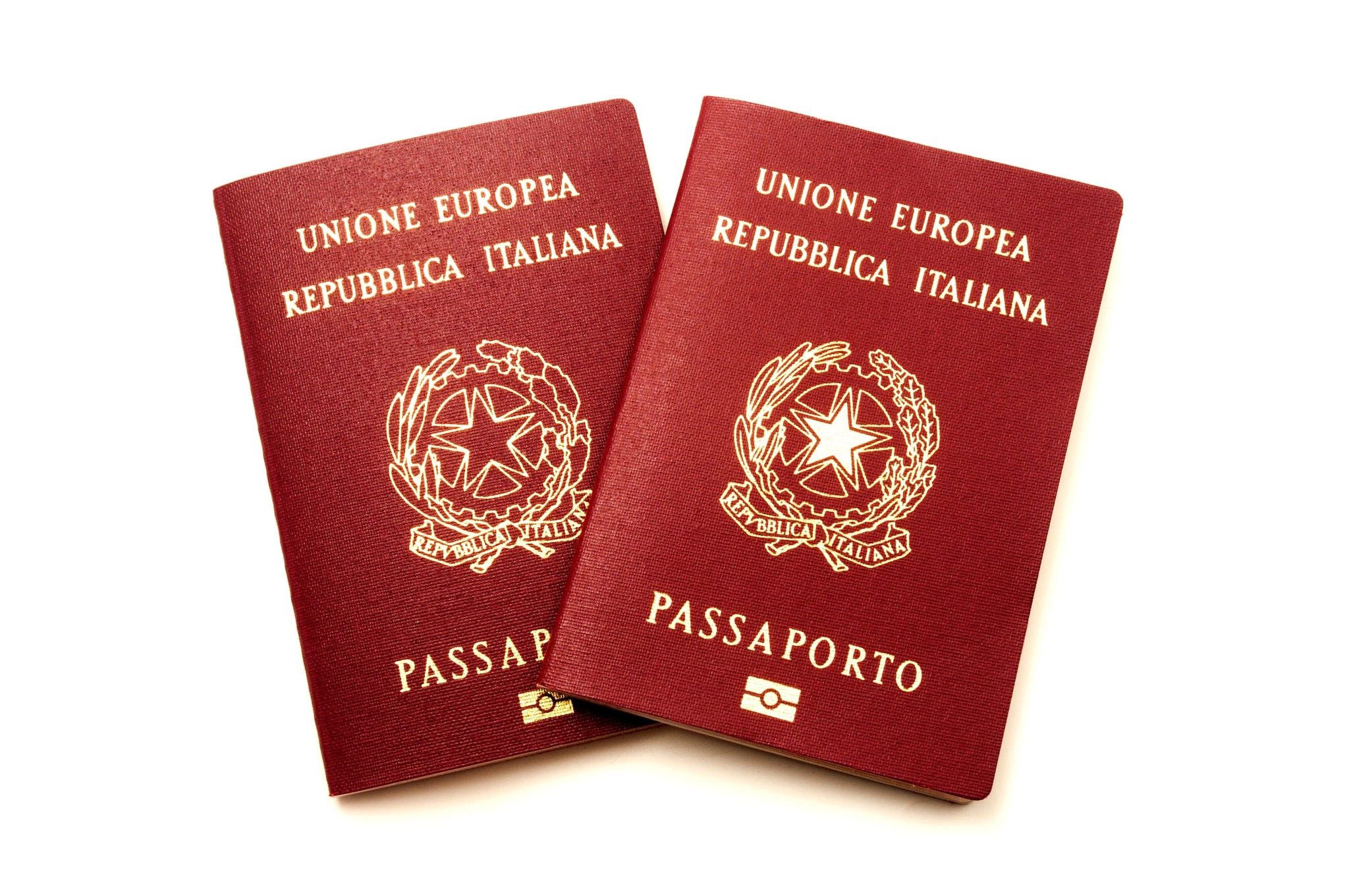
Italian citizenship and an Italian passport are separate from the Investor Visa. Investors first obtain residence status and may only later apply for naturalisation if they meet the legal requirements.
Documents Needed for Application for Italian Passport
A citizenship application form is filled out through the official government bodies in Italy, and submitted along with the documents:
-
Birth certificates, valid passports, and Italian residence permits of all applying family members. Should be submitted in both original form and in form of notarized and translated copies.
-
Photographs in passport format of all applicants.
-
No criminal record certificate issued by the country of origin and any third countries where the applicants have ever resided after turning 14.
-
Italian language proficiency certificate proving the B1 CERF level or higher.
-
Ministry of the Interior fee receipt in the amount of €250.
Processing and outcomes depend on the competent authority, the route used, and the applicant's documents. Applicants should not treat any estimate as a guarantee of citizenship approval or timing.
Application Process to Get Italy Golden Visa
7+ days
Submitting a request for a Nulla Osta — a certificate of no impediment
The application and all the documents are submitted electronically via the portal of the Investor Visa Committee.

The application and all the documents are submitted electronically via the portal of the Investor Visa Committee.
30 days
Obtaining a Nulla Osta
The Investor Visa Committee reviews the application, and either approves or rejects it or requests additional documents.
The certificate is valid for six months from the issue date.
The Investor Visa Committee reviews the application, and either approves or rejects it or requests additional documents.
The certificate is valid for six months from the issue date.
7+ days
Submitting an investor visa application
The application is submitted to an Italian Consulate or Embassy in the country of residence. The consular visa fee is €116 per applicant.
The application is submitted to an Italian Consulate or Embassy in the country of residence. The consular visa fee is €116 per applicant.
Up to 120 days
Obtaining an investor visa
The Consulate reviews the provided documents and decides on visa issuance.
The Consulate reviews the provided documents and decides on visa issuance.
7+ days
Travelling to Italy and submitting a residence permit application
Within 8 days after entering Italy, the investor has to personally visit the Questura, i.e. the Police office, and request an Investor Residence Permit.
The investor needs to submit the arrival date, the location of the Questura and the date of application in the Questura via the Investor Visa Committee portal.
Costs at this stage are about €100.
Within 8 days after entering Italy, the investor has to personally visit the Questura, i.e. the Police office, and request an Investor Residence Permit.
The investor needs to submit the arrival date, the location of the Questura and the date of application in the Questura via the Investor Visa Committee portal.
Costs at this stage are about €100.
Up to 3 months
Investing
Within 3 months from the application date, the investor must fully transfer the funds and provide confirmation documents.
In case this condition is not met, the visa is cancelled.
Within 3 months from the application date, the investor must fully transfer the funds and provide confirmation documents.
In case this condition is not met, the visa is cancelled.
30+ days
Getting a Residence Permit card
After all documents are provided, and the investment is made, the Migration Service of Italy reviews the application and issues a Residence Permit card.
After all documents are provided, and the investment is made, the Migration Service of Italy reviews the application and issues a Residence Permit card.
The residence path and the citizenship path are separate. The investor residence permit can support long-term residence planning if the investment and residence requirements are maintained. A later citizenship application requires a separate naturalisation review under Italian law.
Alternatives to Italian Citizenship
Italy is not the only residence by investment option for families planning long-term mobility. Each country has separate residence, permanent residence, and naturalisation rules, and these rules can change.
Do not compare programmes only by headline years or passport benefits. Investors should review residence obligations, eligibility, family inclusion, source-of-funds checks, and the legal route from residence to any later citizenship application.
Malta and other European options follow different frameworks and due-diligence standards. Any comparison should be checked against current official and legal sources before relying on it for a citizenship plan.
Conclusion
The Italy Investor Visa can be useful for eligible non-EU investors who want a residence route in Italy. It should not be treated as citizenship by investment.
Before planning around Italian naturalisation, review the residence conditions, investment-maintenance rules, family-inclusion requirements, and the separate citizenship application process.
For families comparing European routes, the safer approach is to verify current programme rules before choosing a residence or citizenship strategy.