

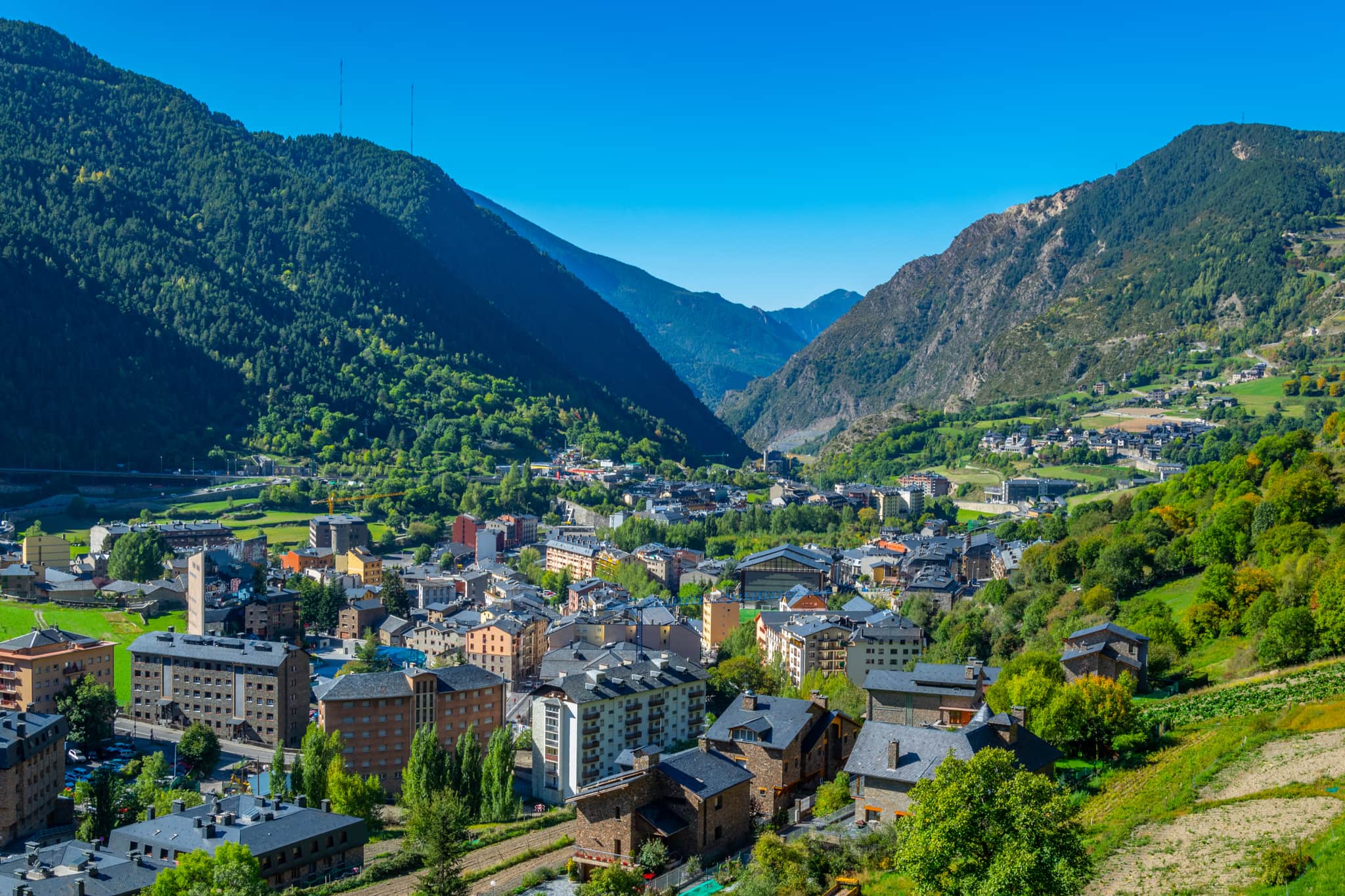
How to Get Residency in Andorra
Andorra residency requires choosing between two legal tracks, each governed by different presence and financial conditions.
Passive residency (Residència Passiva) is the investment route. The main applicant must place at least €1,000,000 in qualifying Andorran assets and spend a minimum of 90 days per calendar year in the country. Passive residents may not take local employment or run a business in Andorra; their income must come from outside.
Active residency applies to those who relocate their primary economic activity to Andorra. Active residents must be present for at least 183 days per year and pay a non-refundable AFA state contribution of €50,000. There is no minimum investment threshold for the active permit itself.
Family reunification allows the spouse, minor children, and economically dependent children aged 18–25 in full-time university education to join either permit holder.
All applicants need an Andorran bank account, confirmed accommodation in Andorra, a clean criminal record from the past five years, and private health insurance. Andorra is not a member of the Schengen Area. Non-EU nationals entering via France or Spain must satisfy Schengen entry requirements before crossing into Andorra.

Discover 9 most popular Golden Visa programs and choose the best one for your goals.
Passive and Active Residency in Andorra
Andorra's Government issues more than a dozen types of residence permit. For most international applicants, the practical choice is between passive residency and active residency.
Passive Residency
Passive residency suits investors, retirees, and those with foreign-sourced income who do not intend to work in Andorra.
Core obligations:
-
Physical presence: at least 90 days per calendar year in Andorra.
-
Investment: minimum €1,000,000 across qualifying Andorran asset classes (detailed in the section below).
-
AFA state contribution: €50,000 for the main applicant and €12,000 per dependent, paid to the Andorran Finance Authority — non-refundable as of January 2026.
-
Income proof: at least €56,472.12 per year from foreign sources (main applicant), plus €18,824.04 per dependent — 300% of Andorra's minimum annual salary, effective 1 July 2026.
The 90-day minimum is passive residency's practical advantage. Applicants can maintain businesses, properties, and family ties in other countries while building Andorran residency status. The Immigration Service verifies presence through entry and exit records and local registration data.
Active Residency
Active residency is for entrepreneurs and business owners who move their primary operations to Andorra.
Core conditions:
-
Physical presence: at least 183 days per year in Andorra. This is the primary-residence threshold and makes Andorra the applicant's tax home.
-
AFA state contribution: €50,000, non-refundable (formalised under the Omnibus 2 Law, January 2026).
-
The applicant's primary income must come from economic activity conducted inside Andorra.
At 183 days per year, the applicant becomes fully tax-resident in Andorra. The personal income tax rate is capped at 10%, with no tax on capital gains, dividends, wealth, or inheritance. For a founder or investor moving income from a higher-tax jurisdiction, that difference is material.
Permit Validity and Renewal
Permit Validity and Renewal

Both tracks start with a two-year initial permit and follow this renewal ladder. The shift to 10-year renewals after the first six or seven years means a committed resident earns long-term status that requires minimal effort to maintain thereafter.
At each renewal, the applicant must demonstrate continued compliance: maintained investment, sufficient income, and the required minimum days in Andorra.
At a Glance: Which Track Fits
At a Glance: Which Track Fits
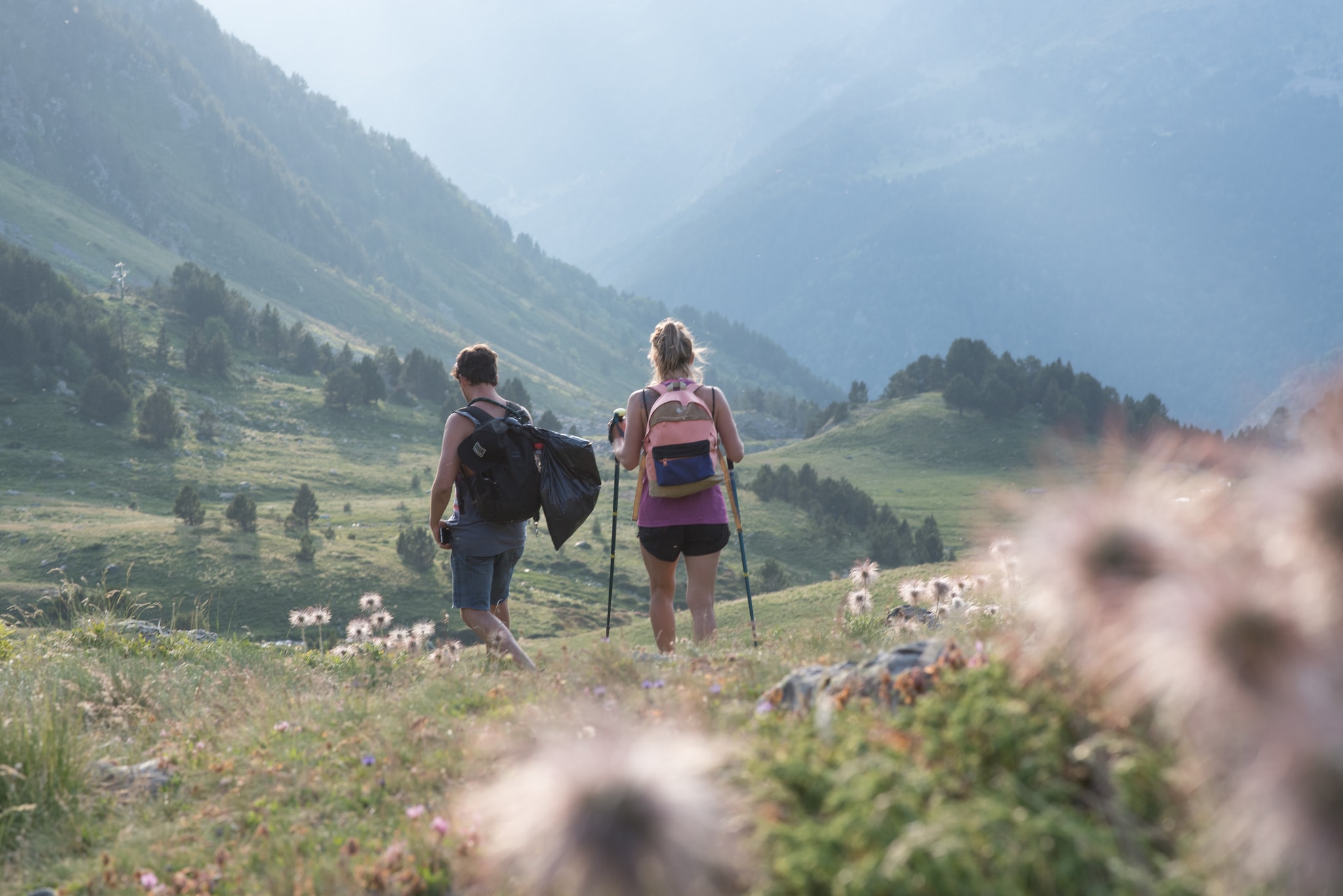
The healthcare system in Andorra is rated among the top five in the world. 90% of all medical costs are covered by insurance. Up to 84 years is the country's average life expectancy
Andorra Passive Residency Requirements
The passive residency track carries specific financial thresholds, tightened under the Omnibus 2 Law of January 2026.
Total Minimum Investment
Qualifying investments must reach at least €1,000,000 in total. Eligible asset classes are:
-
Real estate in Andorra — the property must be valued above €800,000 per unit.
-
Shares in Andorran resident companies.
-
Debt instruments or financial products from Andorran entities or public authorities — subject to a 36-month holding restriction. After that period, the applicant must reinvest into other qualifying permanent Andorran asset classes.
-
Life insurance products from local Andorran providers.
Applicants may combine asset classes to reach the €1,000,000 threshold, within those restrictions.
AFA State Contribution
Every passive residency applicant pays a non-refundable contribution to the Andorran Finance Authority (AFA):
- Main applicant: €50,000
- Each dependent: €12,000
This amount counts towards the €1,000,000 investment minimum. An applicant with one dependent must therefore accumulate at least €1,062,000 in total — with €62,000 covered by the AFA payments and the remainder in other qualifying assets.
Before the Omnibus 2 Law (effective January 2026), this AFA payment was refundable on renouncing residency. It is now a permanent state contribution.
Income Requirement
Passive residency applicants must demonstrate annual income from sources outside Andorra — exceeding 300% of the Andorran annual minimum salary for the main applicant, plus 100% of that figure per dependent. Following the extraordinary 2.8% increase of the Andorran minimum wage to €1,568.67 per month, effective 1 July 2026 (Govern d'Andorra), the current thresholds are:
- Main applicant: at least €56,472.12 per year
- Each dependent: at least €18,824.04 per year
For a family of four (two adults, two dependants), the minimum combined foreign income required is approximately €112,944. These income levels must be verifiable through pension certificates, tax returns, and bank statements, and the funds must be held in an Andorran bank account.
Real Estate Transfer Tax
Foreign nationals purchasing property in Andorra pay a progressive transfer tax introduced under Omnibus 2:
Real Estate Transfer Tax
A single residential property at the €800,000 minimum generates a transfer tax of €48,000. Applicants planning to use a second property to reach the €1,000,000 threshold should factor the higher 10% rate into the total cost.
5 Benefits of Obtaining an Andorran Residence Permit
Andorran residency offers more than a tax planning address. The combination of genuine lifestyle quality and a substantive tax regime is what keeps the programme relevant for high-net-worth individuals.
1. Safety. Andorra has one of the lowest crime rates in Europe. The two road border crossings into France and Spain are staffed around the clock.
2. Nature. The entire territory sits within the Pyrenees — skiing, hiking, and mountain biking across 468 km². Grandvalira, the largest ski area in southern Europe, is accessible from the capital in under 40 minutes.
3. Taxation. Personal income tax is capped at 10%. Andorra levies no tax on wealth, inheritance, capital gains, or dividends received from Andorran companies. Corporate tax is also capped at 10%, and VAT (called IGI) runs at just 4.5%.
4. Cross-border access from Andorra. Andorra has open border arrangements with neighbouring France and Spain, allowing residents to travel freely between the three countries. For other Schengen states, residents may obtain short-stay visas.
5. Outdoor activities. The mountainous terrain offers skiing, mountain biking, and hiking through terrain that changes character entirely between winter and summer.
Property investment in Andorra also carries structural demand from French and Spanish buyers, and supply is constrained by geography — a combination that has supported prices over time.
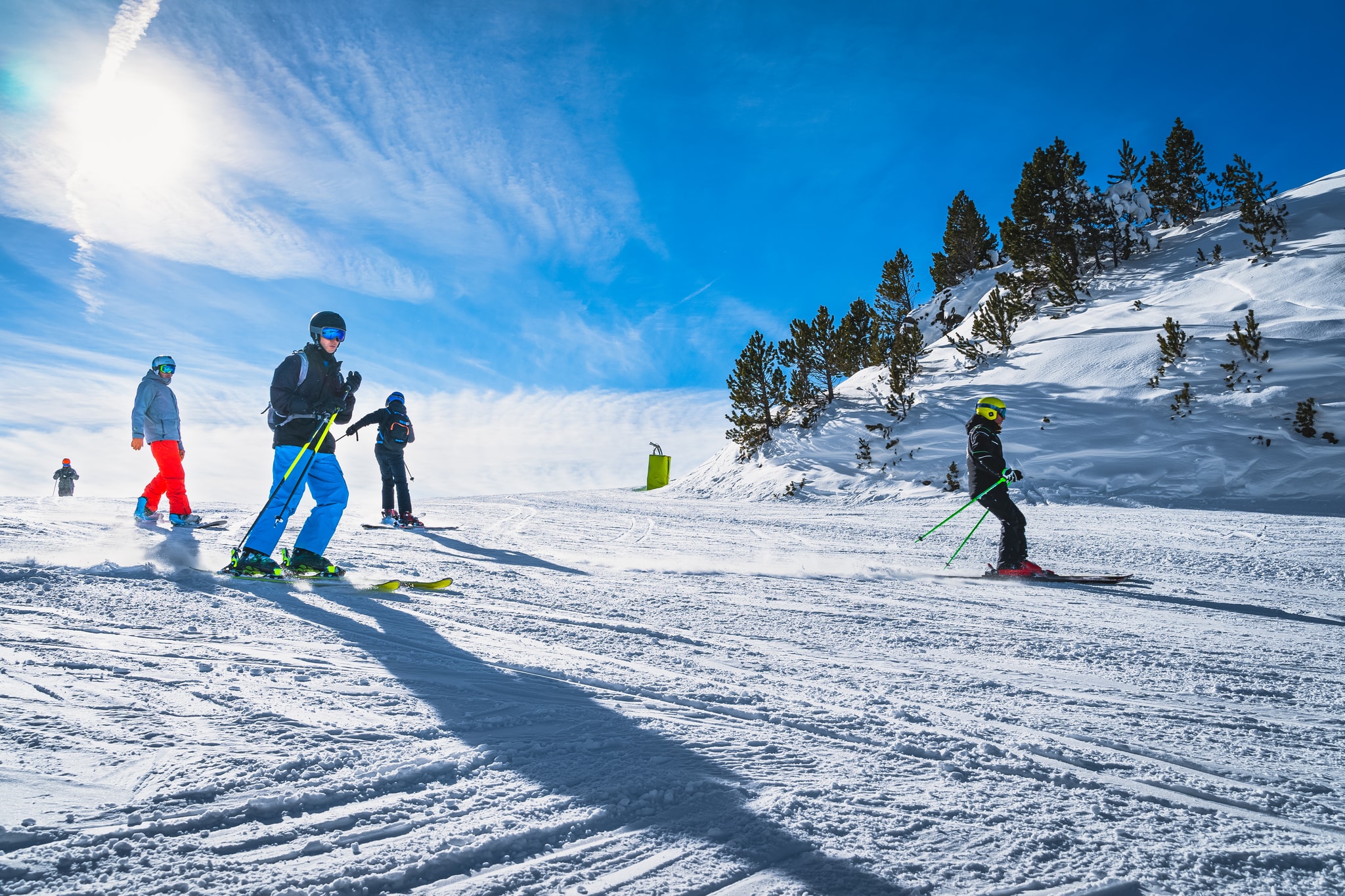
Grandvalira is the largest ski area in Southern Europe, with over 200 kilometres of slopes. The resort includes several different sectors and offers activities for all levels of skiers and snowboarders
Who Can Get Andorra Residency by Investment
Foreign nationals aged 18 and over with no criminal record may apply for an Andorra passive residency permit. Together with the main applicant, a legal or civil union spouse, minor children, and children aged 18–25 who are unmarried, fully economically dependent on the applicant, and enrolled in full-time university study may also apply.
Same-sex marriages are recognised in Andorra. If a marriage is not yet registered in Andorra, one partner may obtain a residence permit first, then register the marriage locally so the other partner can obtain residency as a family member.
The applicant must also meet the programme requirements:
-
Buying or renting real estate in Andorra.
-
A medical health report.
-
Proof of savings and income.
-
Proof of the legal origin of funds.
-
A police clearance certificate.
-
Full-coverage health insurance.
Required Documents for the Andorra Residence Permit Application
-
Forms for opening a bank account.
-
Originals and copies of the national and international passports.
-
A bank statement.
-
A letter of recommendation from a bank.
-
Disclosure of origin and proof of the legality of funds transferred to the bank.
-
Evidence of the place of residence for the last 5 years.
-
Proof of employment for the previous 5 years.
-
Corporate documents for business owners.
-
Tax returns for the last 5 years.
-
Police clearance certificates are issued for at least 3 months.
-
A marriage certificate.
-
Confirmation of a permanent address in Andorra.
-
Medical insurance.
Step-by-Step Procedure for Obtaining the Andorra Residence Permit
2 weeks
Collection of documents
If applicable, investors collect, translate and apostille documents, get medical insurance, and conclude a real estate lease agreement.

If applicable, investors collect, translate and apostille documents, get medical insurance, and conclude a real estate lease agreement.
1 week
Opening a bank account in Andorra
An investor passes Customer Due Diligence to open an account, proving that all the money has been earned legally. After that, the bank helps prepare the remaining documents and choose investments.
An investor passes Customer Due Diligence to open an account, proving that all the money has been earned legally. After that, the bank helps prepare the remaining documents and choose investments.
2 days
Application to the Migration Service of Andorra
An investor needs to apply in person in Andorra. An interview is held on the second day. The application will be considered within 3 to 8 weeks. During this time, the investor and their family will pass Due Diligence. Therefore, we study all documents in advance and warn about possible risks.
An investor needs to apply in person in Andorra. An interview is held on the second day. The application will be considered within 3 to 8 weeks. During this time, the investor and their family will pass Due Diligence. Therefore, we study all documents in advance and warn about possible risks.
1 week
Medical examination and money transfer
A complete medical examination takes up to 4 days. An investor passes the medical test.
A complete medical examination takes up to 4 days. An investor passes the medical test.
3—8 weeks
Getting a residence permit
A residence permit can be received without coming to the country through a trusted representative.
A residence permit can be received without coming to the country through a trusted representative.
6 months
Fulfilment of an investment condition
The investment should be made within 6 months after obtaining a residence permit.
The investment should be made within 6 months after obtaining a residence permit.
Andorran Citizenship: Separate Process from Residency
Andorra does not offer a citizenship by investment program. While the country provides a form for residency by investment, often called "passive residency", obtaining citizenship in Andorra is a separate and more complex process.
Andorran nationality by naturalisation generally requires 20 years of principal and permanent residence in Andorra, including at least the five years immediately before the application, together with integration and other statutory conditions. A shorter route applies to applicants who have completed at least 10 school years in the Andorran education system: they need 10 years of residence before applying. Naturalisation is assessed against these conditions and is not automatic. [1]Govern d'Andorra — Adquisició de la nacionalitat andorrana
Furthermore, dual citizenship is not recognised in Andorra, meaning that to become a citizen of Andorra, you must renounce any other citizenships you hold.
Requirements for Andorran naturalisation via long-term residency:
-
no criminal record;
-
financially stable;
-
health insurance.
How the timeline works. The residence permit follows the renewal ladder above: two years, two years, three years, then 10-year renewals. Naturalisation is a separate application that becomes possible only once the required residence period is met.
It may take a while, but with low taxes and high quality of life, becoming an Andorran national through long-term residency may be worth planning for.
Exploring Alternative Global Citizenship or Residential Permits Programmes
The beauty of these alternative programs is their flexibility and speed. For instance, countries like Malta and Cyprus offer well-structured investment migration programmes — Malta’s Permanent Residence Programme (MPRP) and the Cyprus Golden Visa each have distinct eligibility conditions and investment thresholds. For those focused on the European Union, the Portugal Golden Visa remains one of the region’s most established residency-by-investment routes, now centred on qualifying investment-fund and other non-real-estate options.
In addition to European countries, Caribbean nations such as St Kitts & Nevis and Antigua & Barbuda offer enticing Citizenship by Investment Programs (CIPs), requiring significantly lower financial commitments than their European counterparts.
Other Ways to Obtain Second Citizenship or Residency
All these programs offer broad travel access across numerous countries, including Schengen Area nations, the United Kingdom, among others. It's worth noting that each country has specific requirements regarding physical presence during the application process; some might not require any stay, while others may demand a few days' visitations annually.
Beyond Europe and the Caribbean regions, other parts of the globe also host similar schemes. Countries like Vanuatu in the Pacific region offer swift processing times under its Development Support Program DSP, where the minimum donation required is around $130,000 for a single applicant.
Australia provides several visas under the Business Innovation stream, demanding AUD 2.5 million business turnover requirements over the last two years before applying.
Conclusion
Andorra passive residency is one of the few programmes in Europe that combines minimal physical presence (90 days per year), a competitive tax regime, and a stable legal framework in a country with genuine lifestyle appeal.
The Omnibus 2 Law of January 2026 raised the minimum investment threshold to €1,000,000 and converted the AFA deposit into a non-refundable state contribution. Those changes have reduced purely speculative enquiries. Applicants now need to demonstrate both the investment capacity and the income to satisfy the programme's financial requirements — but for those who qualify, the programme remains substantively attractive.
From document preparation to permit issuance, the process typically takes four to five months. The investment itself must be completed within six months of permit approval.
If you are evaluating Andorra residency alongside other European or Caribbean options, the lawyers at My Golden Visa can walk through the full cost comparison, family application logistics, and the income verification requirements specific to your situation. Book a consultation to get a personalised assessment.